Key takeaways
- San Antonio de Prado is Corregimiento 80 of Medellín, a rural district in the southwest of the valley between 1,700 and 3,100 m.
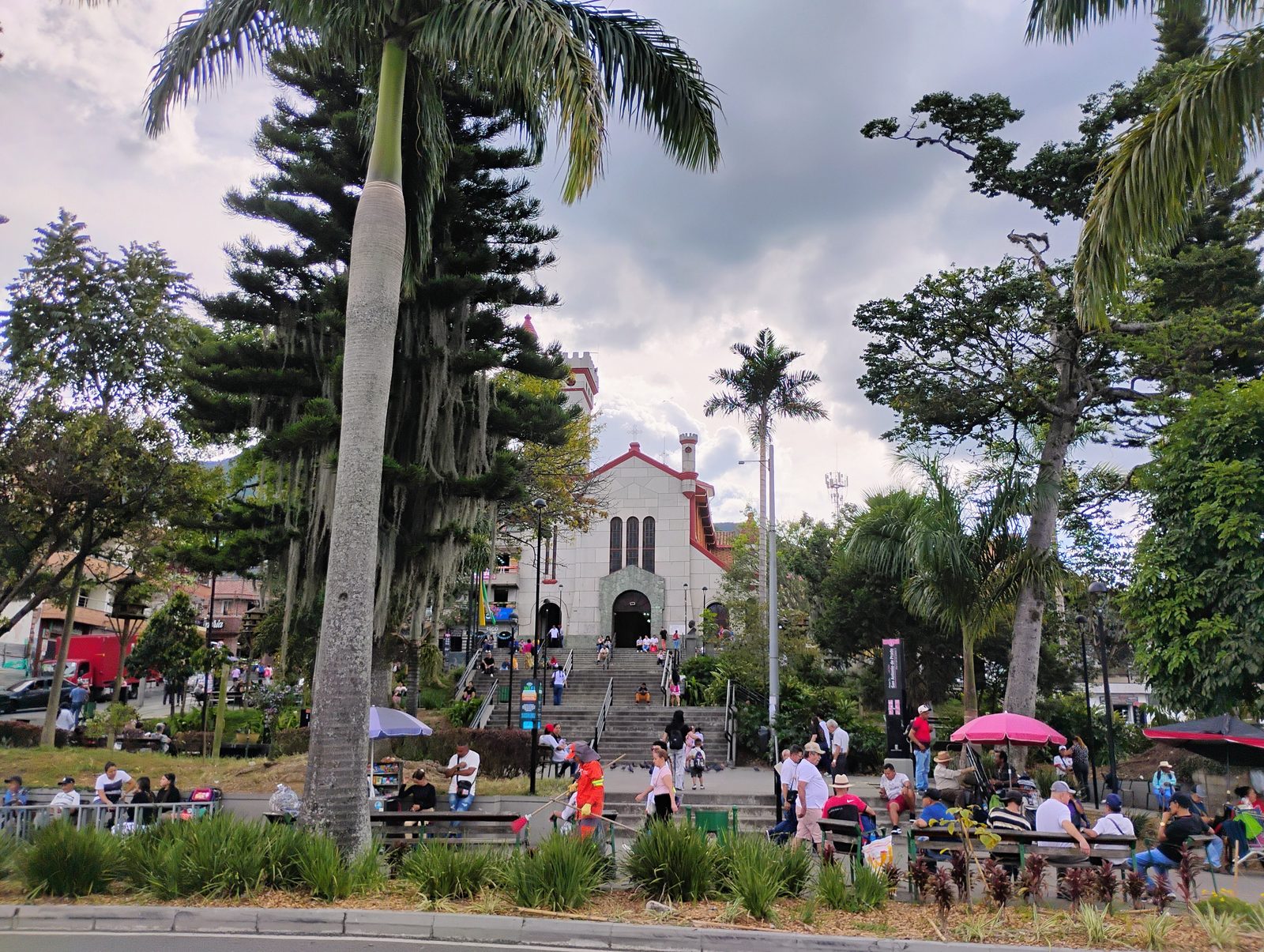
- The heart of a visit is the terraced Parque Cívico and the parish church, with its crenellated clock tower and gilded nave.
- It's cooler than the valley floor, roughly 12–21 °C, so bring layers and a rain jacket.
- The traditional road through Itagüí is narrow and often congested; avoid rush hour and allow extra time.
- For the high reserves and waterfalls, go with a local guide.
On this page
San Antonio de Prado is a mountain town that happens to be part of Medellín. It's officially Corregimiento 80, one of the city's five rural corregimientos (rural districts), and it sits in the southwest of the valley between 1,700 and 3,100 meters above sea level. Come for a terraced main park full of palms and fruit trees, a crenellated church with a working clock, street murals, evening riders on horseback, and miradores with wide views back over the Aburrá Valley.
Few foreign visitors make it up here, and that's the appeal. There are no tour buses and no souvenir strip, just a busy, proud town square with a long history. A half day is enough to see the center. A full day gives you time for a viewpoint or, with a local guide, one of the high reserves. This guide covers what to see, how to get there, when to go and how to be a good guest.
Why San Antonio de Prado is worth the trip
Most of the 50.77 km² corregimiento is countryside. Only about 0.26 km² is the urban center, the cabecera (town center), and everything else is farms, forest and steep green hillsides. Yet it's also the most populous corregimiento in Medellín, with 130,575 residents according to the parish. So you get a lively town center with real mountain country right behind it.
It's also cooler. Temperatures run roughly 12 to 21 °C, so it feels fresher than the valley floor, especially in the morning and after dark. Out in the countryside, the economy still runs on farming, pig and fish farming and cattle. In town, commerce clusters around the main park and along the two access roads. It feels nothing like El Poblado, which is the point. If you liked our roundup of hidden gems in Medellín, this is a natural next step.
The main park and the church
Parque Cívico
Start at the main park, the Parque Cívico. It's built in terraces down the hillside, with gardens, fruit trees and wide steps (gradas) that work as seating, plus food kiosks. The church atrium is at the top. A plaque explains that this spot was linked to the Heliconia salt mines in pre-Hispanic times. Later it became a stop for arrieros (mule drivers) and traders, and later still a place where farmers met to trade and gather.
The park was fully renovated in 2016. The project added public space, joined the church atrium to the park, improved pedestrian flow, reorganized the vendors and made room for arts and culture. Look for the Carrara-marble Virgen Inmaculada and the figures of two local maestros, Horacio Betancur and Hernando Montoya, shown in conversation among the royal palms. Tree lovers will spot algarrobos, guayacanes, tambores, araucarias and ceibas.
The parish church
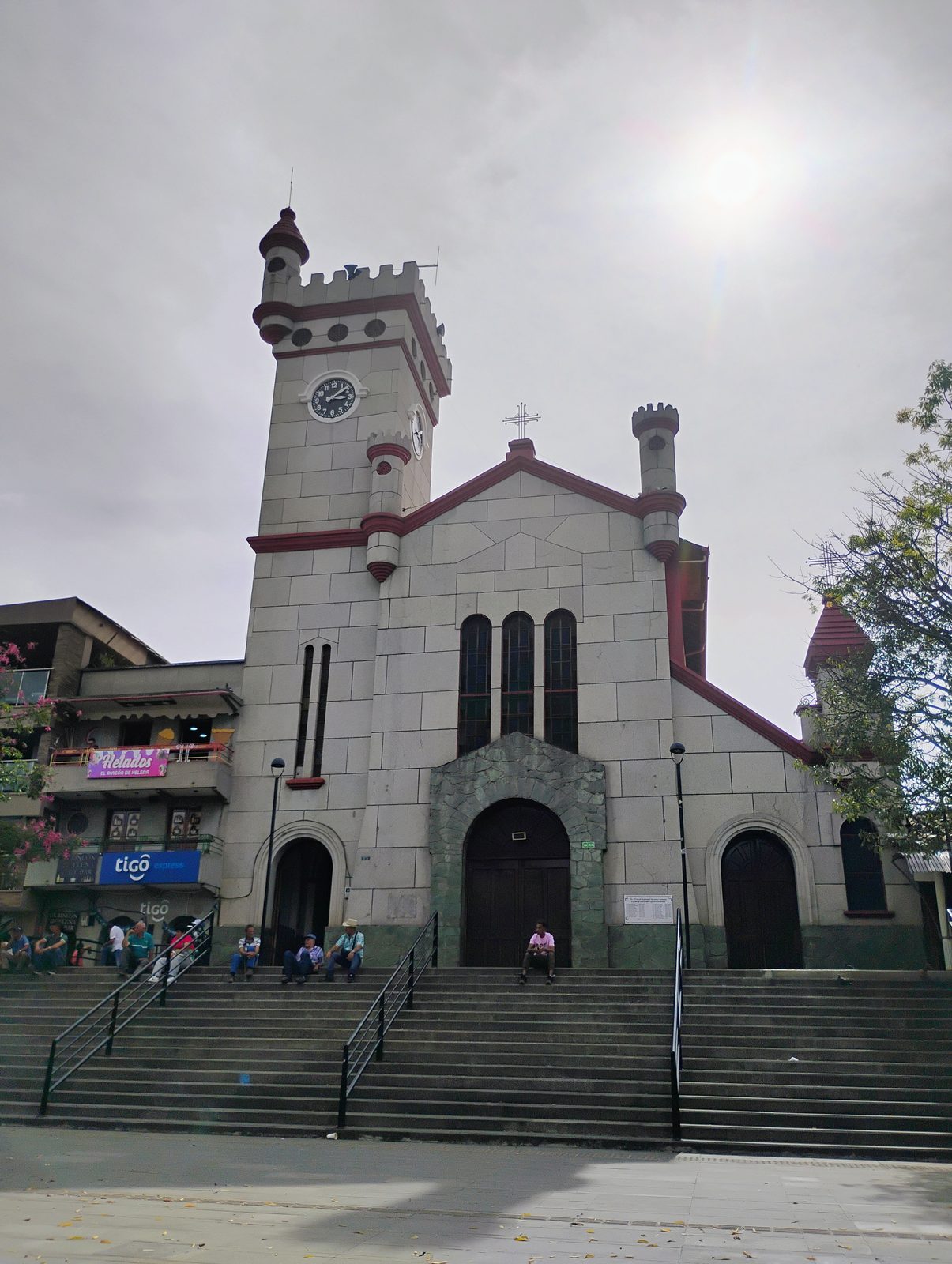
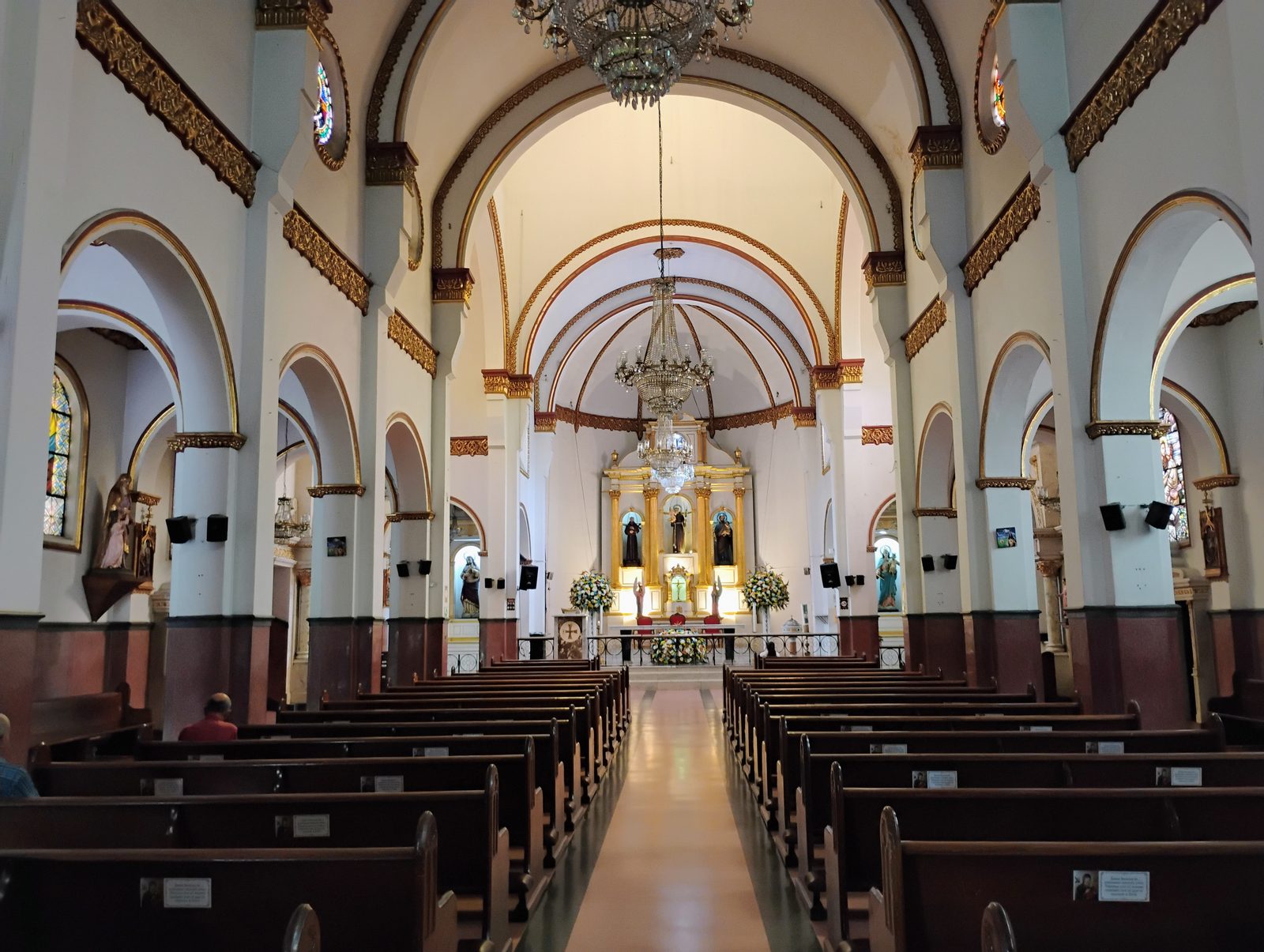
The church is the anchor of the square. Its crenellated tower still has a working clock, and the rust-colored bands on the facade were added long after it was built. Inside, the central nave is lined with gilded arcades and hung with crystal chandeliers. It's worth a few quiet minutes even if you don't stay for mass.
The parish publishes its mass times, and at last check they were Monday to Saturday at 6:30, 8:00 and 18:30. Sunday has eight masses: 6:30, 8:00, 10:00, 11:00, 12:00, 17:00, 18:00 and 19:00. Confession is offered daily before and after each mass. Times can change, so check the current mass schedule on the parish website before you go.
A short history of the town
This land was handed out in colonial land grants. In the 18th and 19th centuries, people mined gold and salt here. The town itself was founded in 1869 around what is now the main park. A painting of the Virgin of Chiquinquirá dated to that year is kept in the Casa de la Cultura.
| Year | What happened |
|---|---|
| 18th–19th c. | Gold and salt mining on colonial land grants |
| 1869 | Town founded around today's main park |
| 1887 | Made a parish |
| 1903 | Separated from Itagüí as an independent municipality |
| 1909 | Incorporated into Medellín as a corregimiento |
That six-year run as its own municipality still shows in local pride. People here say they're from San Antonio de Prado, not from Medellín. The parish has written up the full history of San Antonio de Prado if you want the longer story before you visit.
Murals and street life
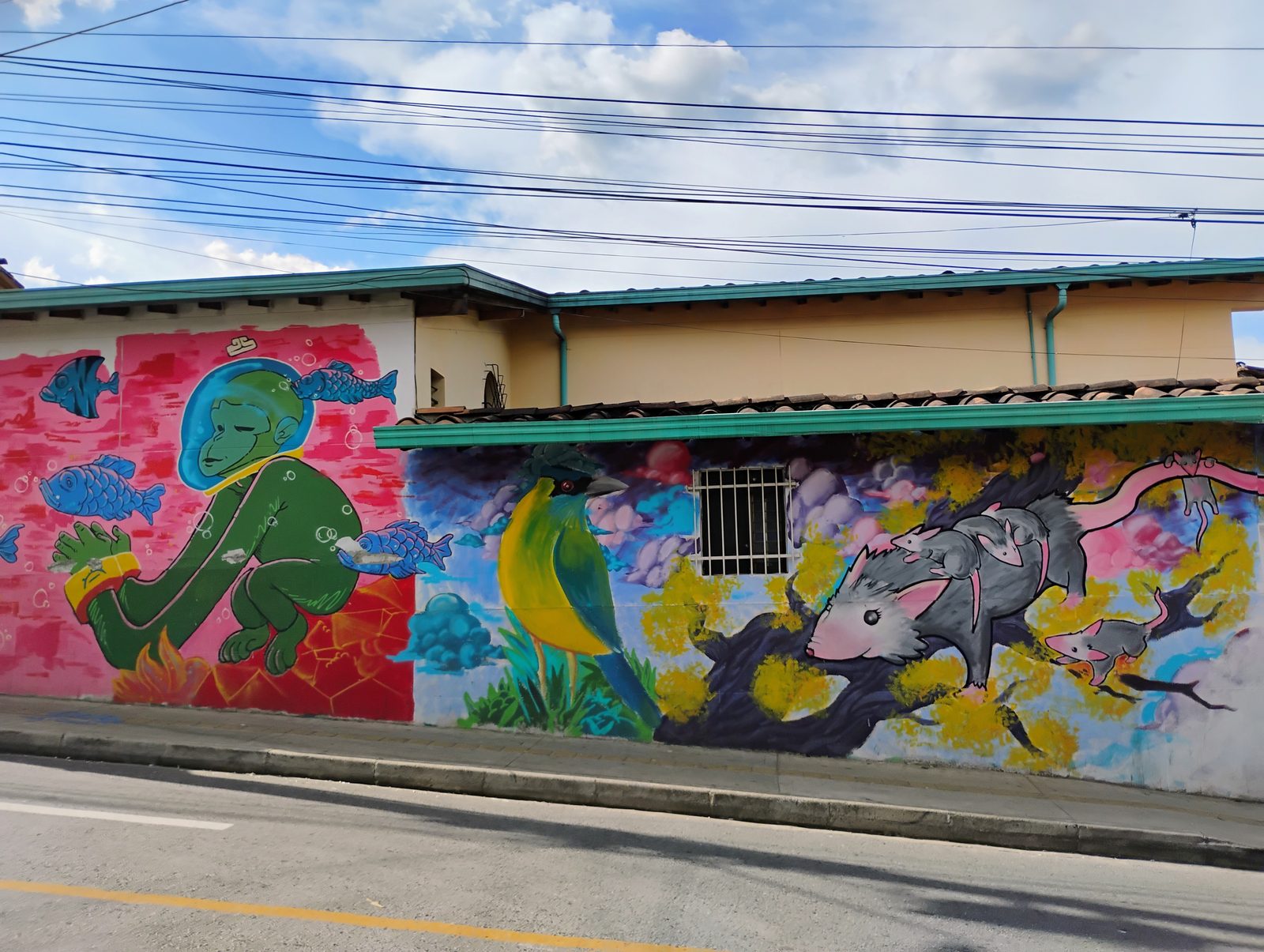
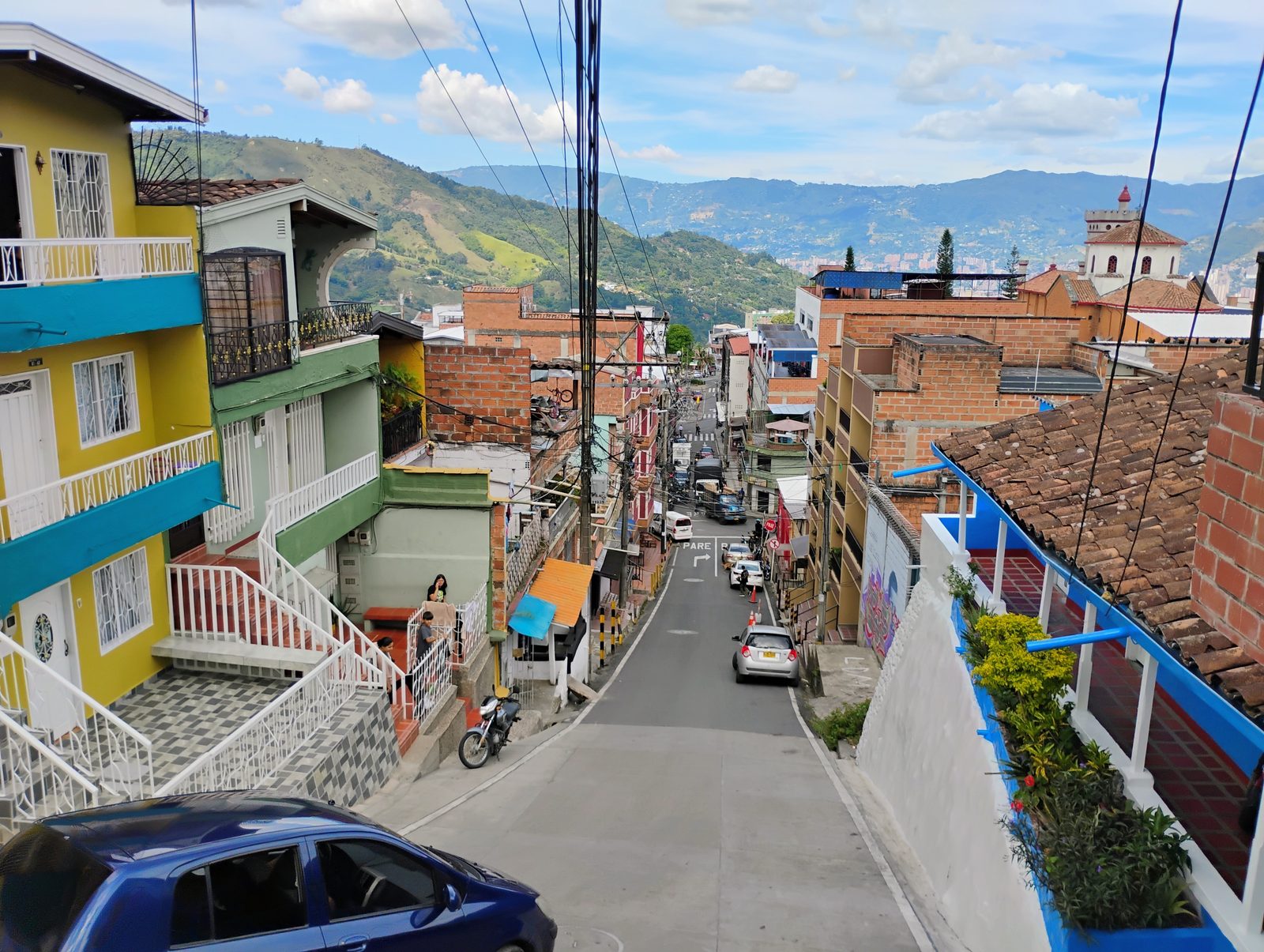
Once you've seen the park, walk the surrounding streets. Two murals are worth finding. One shows local wildlife: a diving monkey, a bird and an opossum carrying its young. The other is a countryside scene with a cow, a bee and a sunflower. Both nod to the farms and forest that surround the town. Some side streets are very steep and open onto views straight down to the valley, with the church tower in the frame.
The riders of Carrera 81
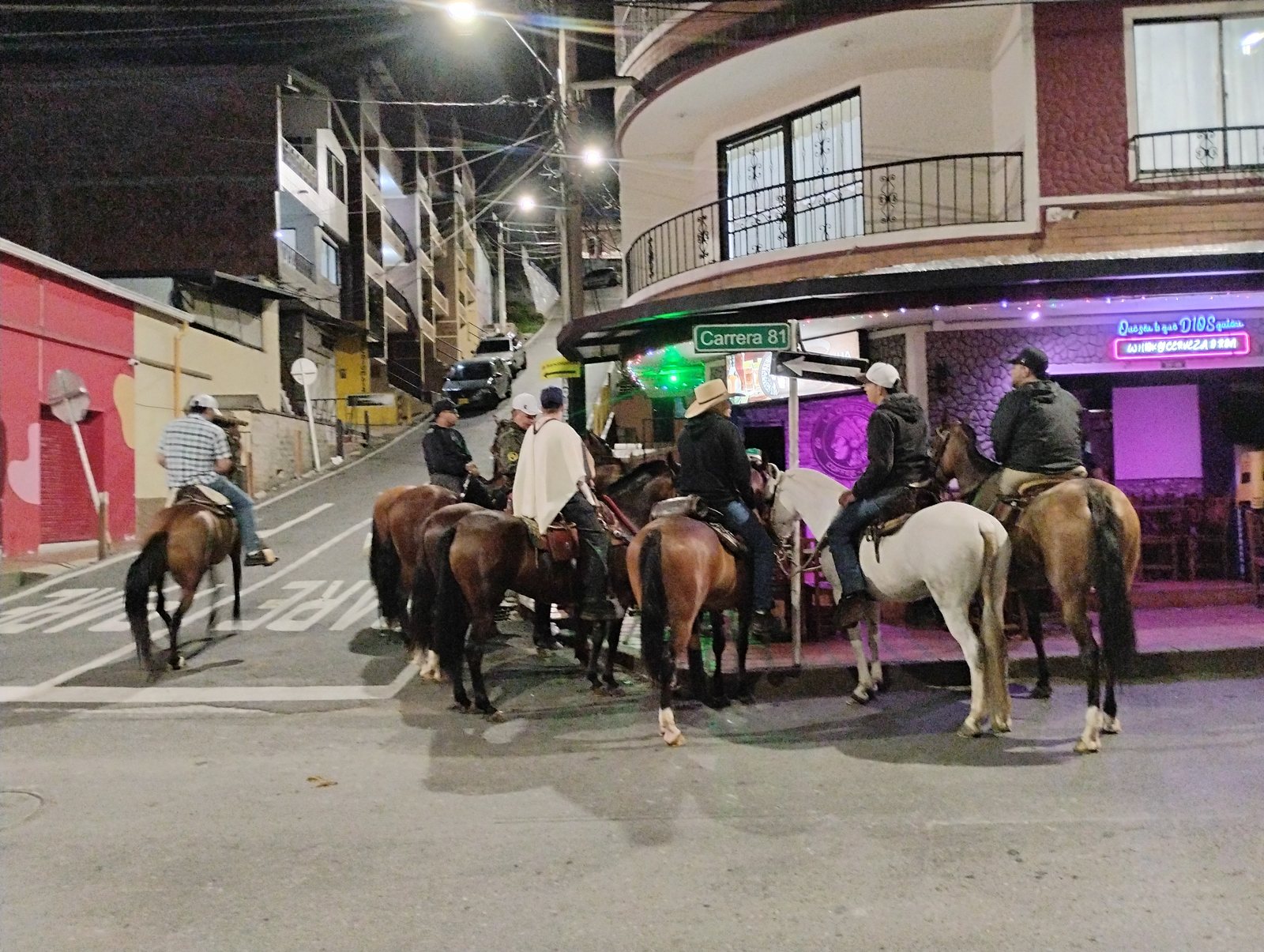
In the evening, you may see riders on horseback stopped at a corner on Carrera 81. They come down from the veredas (rural hamlets), have a tinto (small black coffee) or a beer, and ride back up the mountain. It's not a tourist attraction. It's a living custom, and the riders are neighbors having a drink, not performers.
Watch from a respectful distance. Ask before you photograph anyone up close, never use flash near the horses, and don't crowd the corner.
Miradores and waterfalls
The mountains around town hold some of the best views in greater Medellín. The parish's guide to what to see in San Antonio de Prado lists them in more detail. Here's a quick overview.
| Place | What it is | Good to know |
|---|---|---|
| Alto las Cruces | Named for three large stones or crosses at the top; views over the Aburrá Valley | Kite flying and paragliding; a pilgrimage site, especially on May 3 (Día de la Santa Cruz). The walk takes about two hours. |
| Alto del Chuscal | Junction of the roads to San Antonio de Prado, Heliconia and Armenia Mantequilla | Named for chusque bamboo; orchids, bromeliads, palms and yarumos among pine plantations |
| Alto del Guacal | Wide viewpoint | Looks toward Cerro del Padre Amaya, vereda Yarumalito and part of town |
| Alto la Montañuela | Wide viewpoint | Surrounded by native forest |
| Cascada Astilleros | Waterfall at about 2,500 m | Drops about 20 m on the quebrada Astilleros, among native vegetation |
| Cascada El Salto | Waterfall in vereda El Salado | About 15 m high |
The high reserves
The highest ground, the Altos de El Silencio and La Sierra at 3,100 m, belongs to the Cuchilla El Romeral ridge beside the Alto del Padre Amaya. In all, 5,171 hectares in El Romeral and Padre Amaya are protected under Corantioquia, the regional environmental authority. Cerro del Padre Amaya is a reserve shared by Angelópolis, La Estrella and Medellín. It also holds traces of the Aburrá Valley's earliest settlements, with 32 archaeological sites identified. According to the Alcaldía (city government), Alto del Romeral has exceptional bird diversity and about a thousand fern species. It's the largest reserve in the metropolitan system of protected areas, with trails that range from easy to very demanding.
For the high reserves and the waterfalls, hire a local guide. Trails cross private land in places, conditions change after rain, and weather moves in fast at altitude. A guide will know which routes are open and suitable for your fitness, and how long they'll really take.
If you collect viewpoints, compare these with the city-side options in our guide to the best viewpoints in Medellín.
When to go
Sunday is when the town feels most alive. With eight masses through the day, families fill the park between services, the kiosks are busy and the church steps turn into a meeting point. If you want that atmosphere, pair it with our tips for spending a Sunday in Medellín. A weekday is calmer and better for photos of the empty nave or the murals.
Plan for the altitude. San Antonio de Prado sits higher than central Medellín, and the miradores and reserves are much higher still. Mornings and evenings are cool, and clouds can roll in quickly. Bring layers, a light rain jacket and shoes with grip for steep streets.
- A warm layer for evenings and the miradores
- A compact rain jacket or umbrella
- Walking shoes with good grip for steep, sometimes wet streets
- Modest clothing if you plan to attend mass
- Cash in small bills for kiosks and snacks
- Water and sun protection for the viewpoints
Our Medellín packing guide covers the basics in more depth.
How to get there
Two roads climb to San Antonio de Prado. One connects through La Estrella to the Autopista Sur near Ancón. The other is the traditional route up through Itagüí. That road is narrow and often congested, and at rush hour the trip can take far longer than the distance suggests. If you're driving or taking a taxi or ride app, avoid weekday peak hours and allow extra time either way.
Public buses run up from the valley, and some routes connect with the Metro system. Routes and stops change, so check current options with the Metro de Medellín or a transit app before you set out rather than relying on an old route number. Coming back after dark, a taxi or ride app from the park is the simplest option. San Antonio de Prado is also the gateway to Armenia Mantequilla, Heliconia and Ebéjico, so it pairs well with a wider drive into the southwest.
How to combine it
Because the traditional road runs through Itagüí, San Antonio de Prado fits neatly into a south-of-the-valley day. You could visit in the morning, then come down for a late lunch in Envigado (see our guide to Envigado, Medellín's real neighborhood) or spend the afternoon in Sabaneta or La Estrella. Or skip the combining entirely and make it a slow half day: a coffee in the park, a quiet visit to the church, a walk to the murals and an early return.
| Time | Half day | Full day |
|---|---|---|
| Morning | Leave mid-morning after rush hour; arrive at the main park | Early start with a local guide for Alto las Cruces or a waterfall |
| Late morning | Visit the church (outside mass times), walk the park terraces | Return to town; rest at the park |
| Midday | Murals and steep side streets; snack at the kiosks | Lunch in town; visit the church and park |
| Afternoon | Head back down before the evening traffic | Murals and street walk; catch a Sunday evening mass if you like |
| Evening | — | Watch the town wind down around the park, then taxi back |
If you're building a longer list of small towns near the city, add this to our list of pueblos beyond Guatapé.
Respectful visitor notes
- Treat the church as a church. It's an active parish, not a museum. During mass, sit quietly or step out; silence your phone and skip photos while the service is on.
- Dress modestly inside. Covered shoulders and no beachwear is a safe rule for any visit to the nave.
- Respect the riders. The Carrera 81 corner is part of daily life. Observe, don't stage it, and ask before close-up photos.
- Buy locally. Get your snacks and coffee from the park kiosks and local shops.
- Leave the mountains as you found them. Stay on trails, close gates on farmland and carry out your trash.
Frequently asked questions
Is San Antonio de Prado part of Medellín?
Yes. It's Corregimiento 80, one of Medellín's five rural corregimientos. It was briefly an independent municipality after separating from Itagüí in 1903, then became part of Medellín in 1909.
How long should I spend in San Antonio de Prado?
A half day covers the main park, the church, the murals and a snack at the kiosks. Plan a full day if you want to add a viewpoint like Alto las Cruces or a waterfall with a local guide.
Is San Antonio de Prado colder than Medellín?
It's cooler, with temperatures around 12 to 21 °C, because it sits higher up the mountains. Mornings, evenings and the miradores can feel chilly, so bring a warm layer and a rain jacket.
What are the mass times at the San Antonio de Prado church?
At last check, Monday to Saturday at 6:30, 8:00 and 18:30, and eight Sunday masses from 6:30 to 19:00. Times can change, so confirm on the parish website, sanantoniodeprado.org, before you go.
Can I hike to the waterfalls on my own?
We recommend going with a local guide. Trails can cross private land, conditions change after rain and weather moves in quickly at altitude. A guide will know which routes are open and suitable for you.
Let a local build your day
Tell us your dates, interests and pace. We'll help you put together a private Medellín day that fits — pickup included.
Plan my tour →Official resources
Hours, prices and conditions change, especially around holidays. Confirm details locally before you go.